01
Why start over
The old site was a Squarespace page, patched together quickly when London Studio closed — a nav menu of projects with the real work tucked away in PDFs. Nothing about it told you who I am, or what ties the work together.
Most portfolios stop at the work. Mine couldn’t — because my life shapes my work, and I wanted anyone browsing to leave knowing me as a person, not just a designer. So I started from a dual timeline: life above, work below, one continuous line with every project growing out of it.
And where most portfolios are either bare-bones or drowning in motion, this one aims for the middle: fun but functional — the hallmark of how I design.
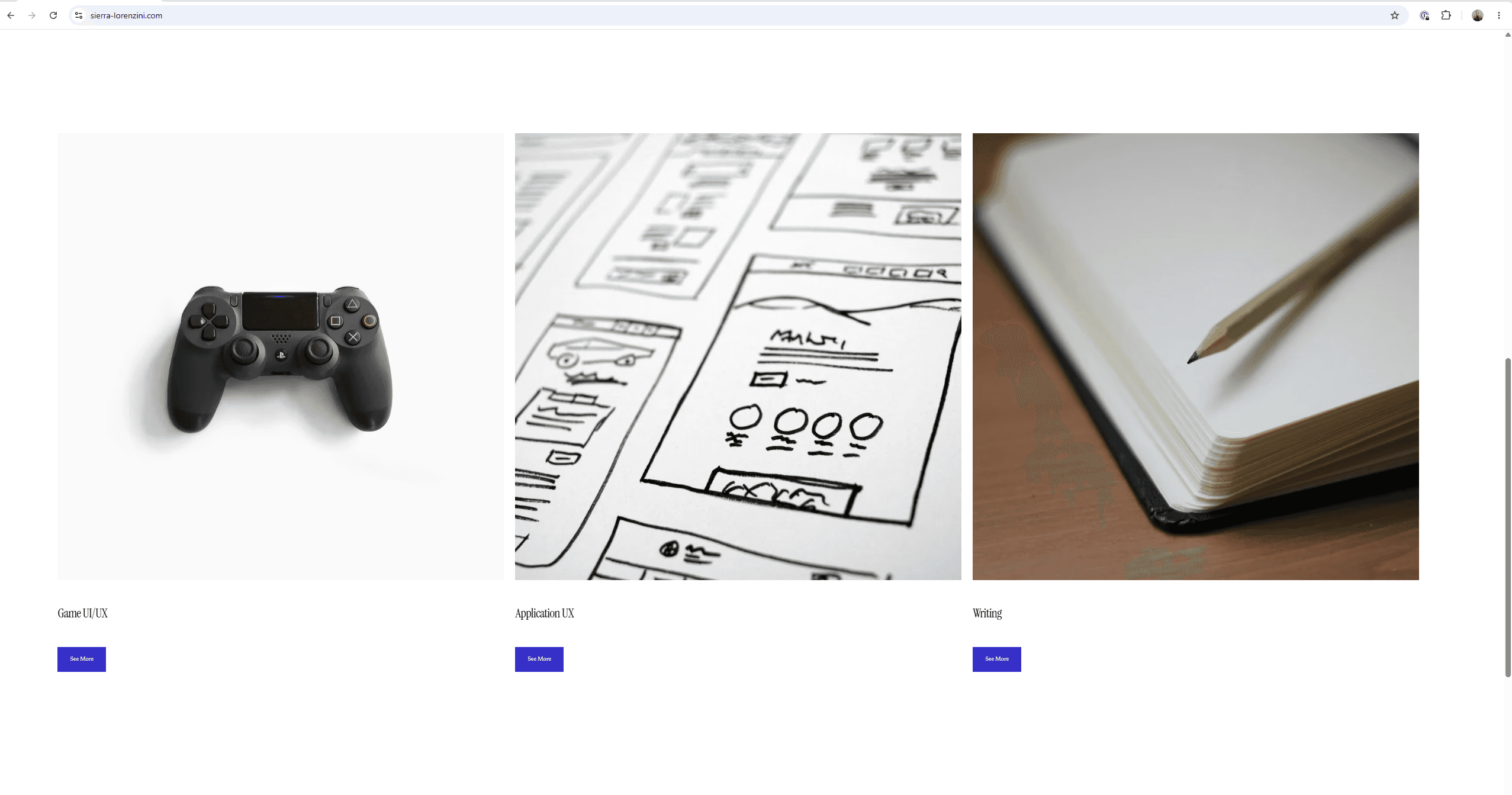
Before — sierra-lorenzini.com

Before — a project page
02
The process
Same process as any game feature: rough it out, put it in front of eyes, iterate. The timeline went through thirteen versions — the concept survived, but almost every detail changed: cards learned to expand, a guided tour appeared, photos got drop-in slots and a colorize treatment, and the case studies grew from stubs into full pages.

v1 — the first rough pass
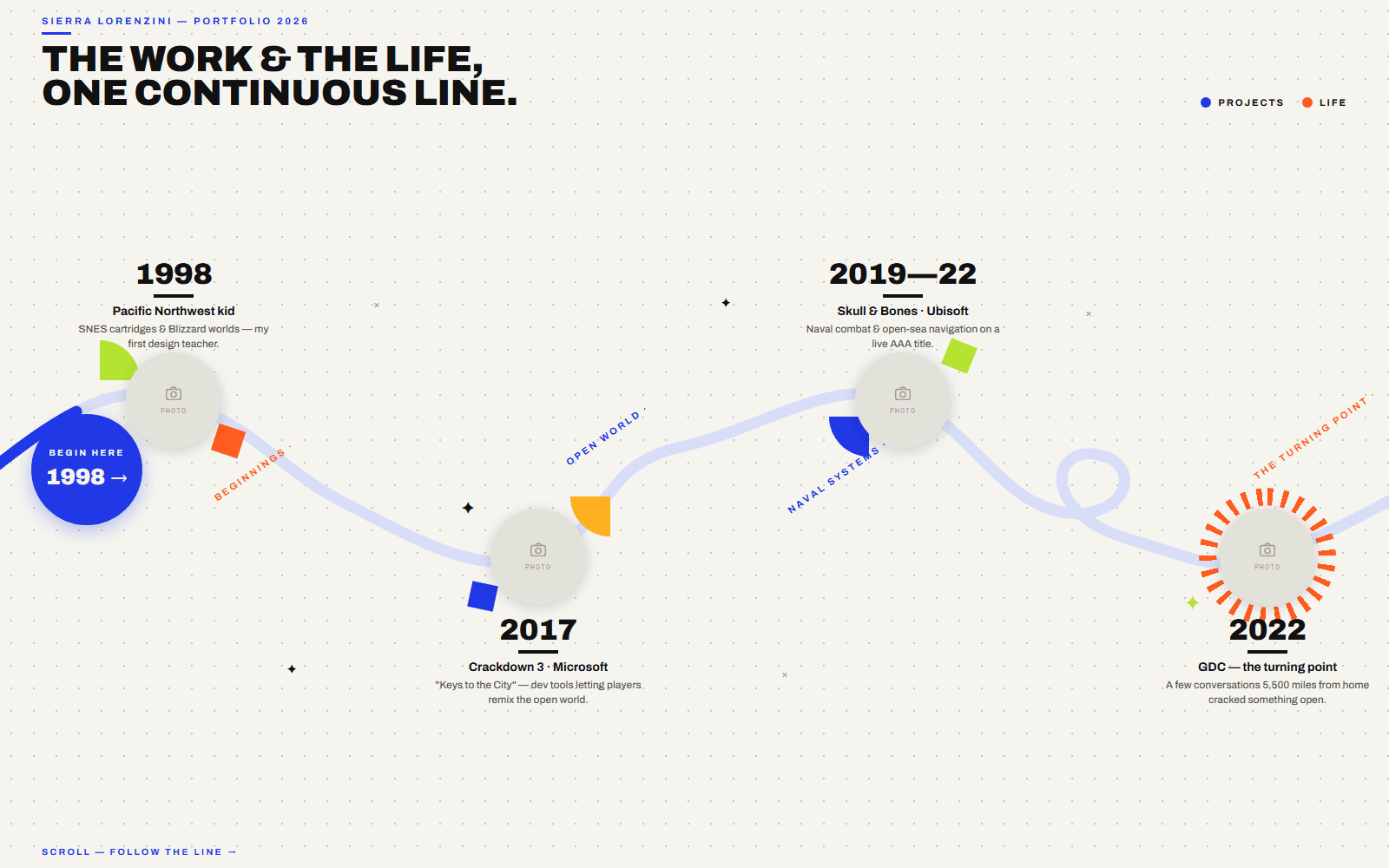
v3 — the structure settles

v6 — tour & interactions land
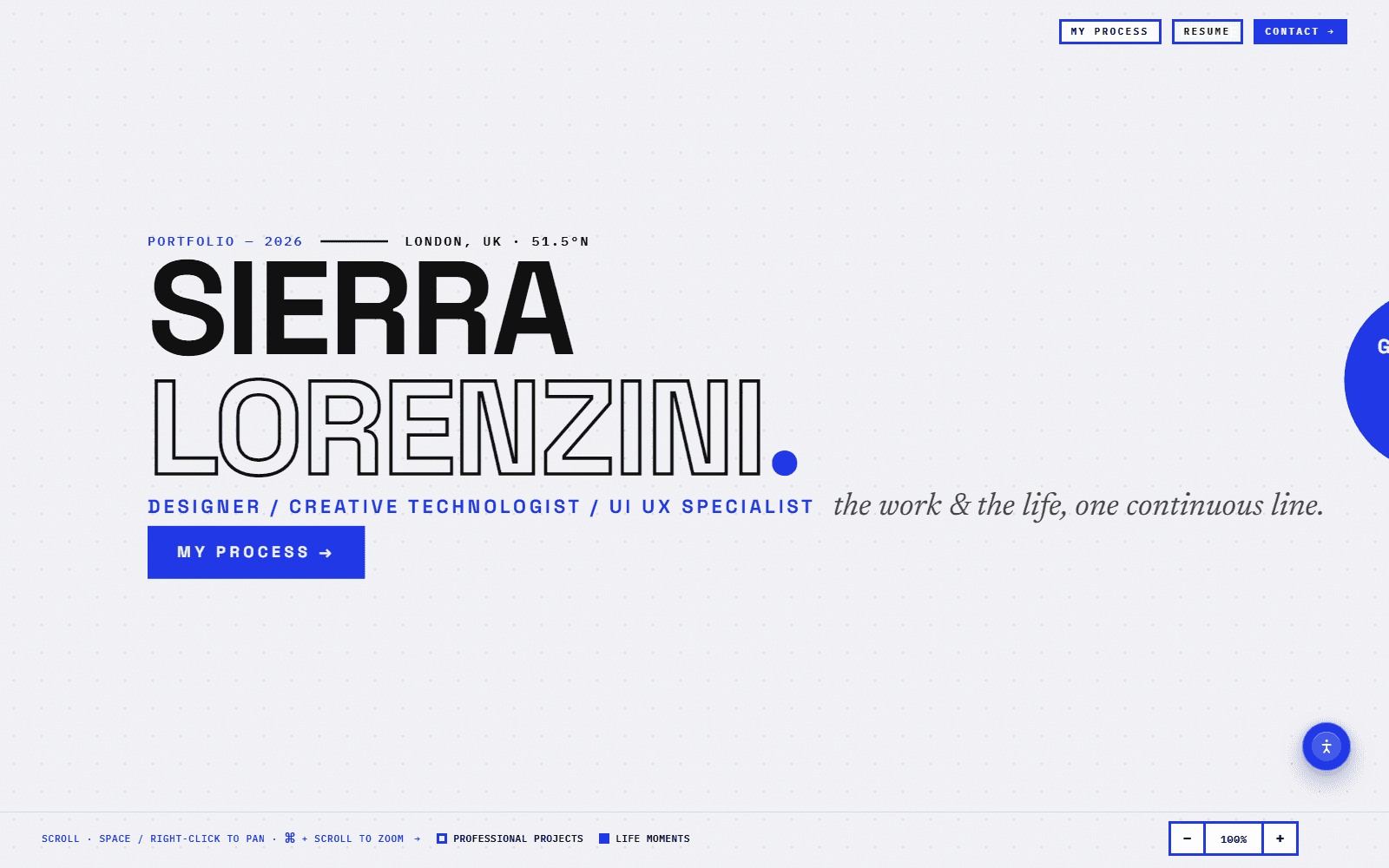
v12 — the previous version

v13 atelier — where you are now
03
Implementation
I wanted this project to double as an experiment: test the power of the new generation of AI design tools and find a way to combine them into one pipeline. Every version has been real, working code from the first sketch — the same “implement, don’t just mock up” habit I bring to game engines, applied to my own site.
The portfolio is itself the newest project in it — designed, implemented, and iterated exactly the way the rest of the work was.
Design — Claude. Concepting and iterating conversationally — every idea explored as a live, interactive page rather than a static frame. Thirteen timeline versions, three process-page concepts, seven project pages.
Build — Claude Code. Handing the designs off to Claude Code to harden them into production code — responsive behavior, performance, and the details a prototype gets to skip.
Ship — Framer. Publishing through Framer for hosting, domains, and easy ongoing edits — so the site stays alive instead of freezing the day it launches.