
The game
Images colour in as they enter view
Best Sports / Racing — TGA 2023
Innovation in Accessibility — TGA 2023
00
Overview
From 2019 to 2023 I was a UX Designer at Turn 10 Studios on the next generation of Forza Motorsport — leading UX for the car upgrade system, freeplay event setup, and the single-player career.
The hardest part was never the depth. It was letting a newcomer feel that depth without drowning in it.
01
Car upgrades
Upgrades are one of the reasons players choose Forza — and one of the least understood systems in the game. Research surfaced four distinct failures.
01 — Navigation
Constant diving in and out of deep, nested menus.
02 — Stats
Players read stat bars like an RPG — higher is better — and made their cars harder to drive.
03 — Approachability
The full system overwhelmed anyone new to sim racing.
04 — Recovery
Hard-earned credits spent on an upgrade that made the car worse.
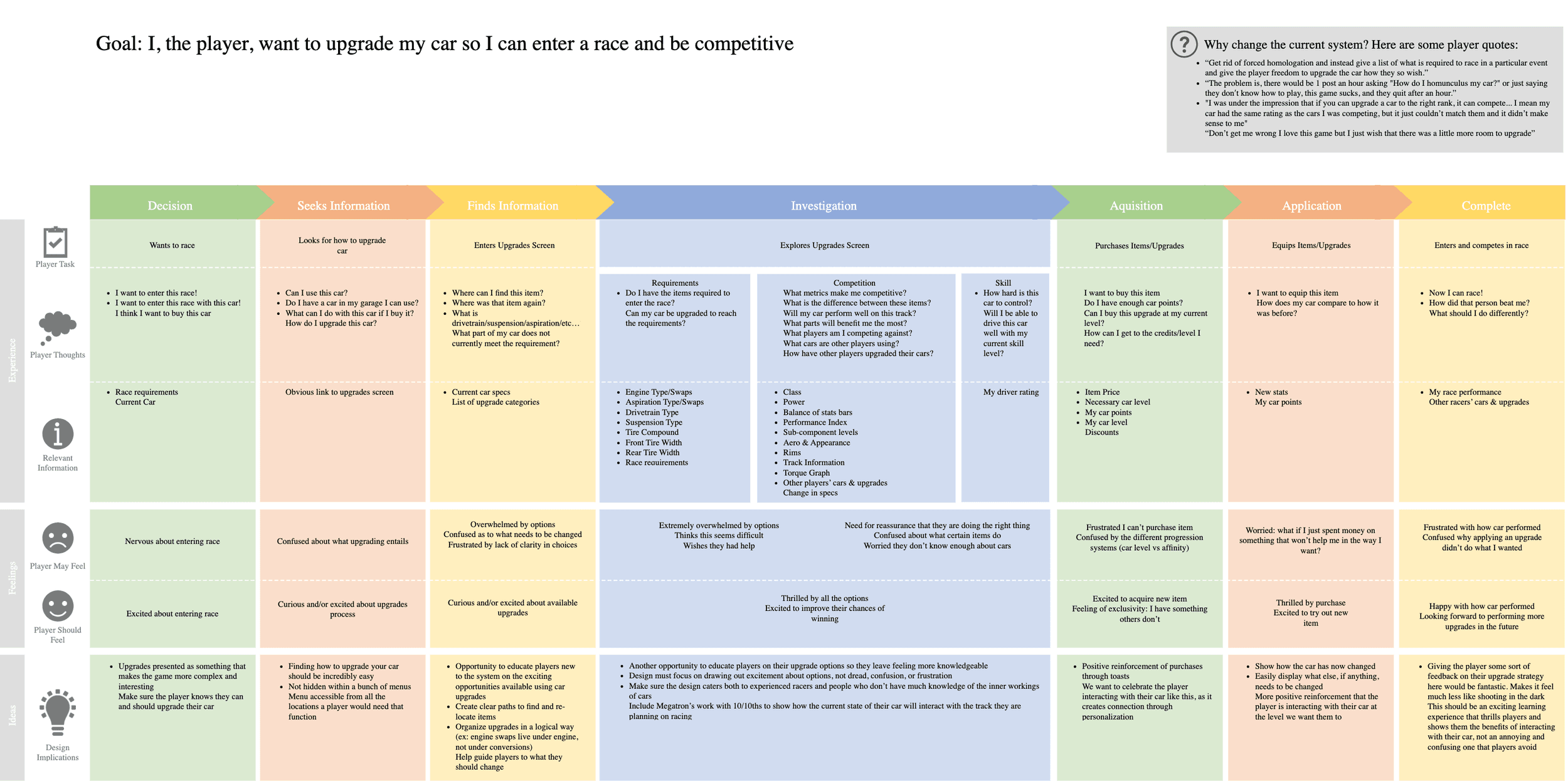
Player journey map
The journey map came first — needs, feelings and drop-off points across the whole upgrade loop, before a single screen was drawn.
Information architecture
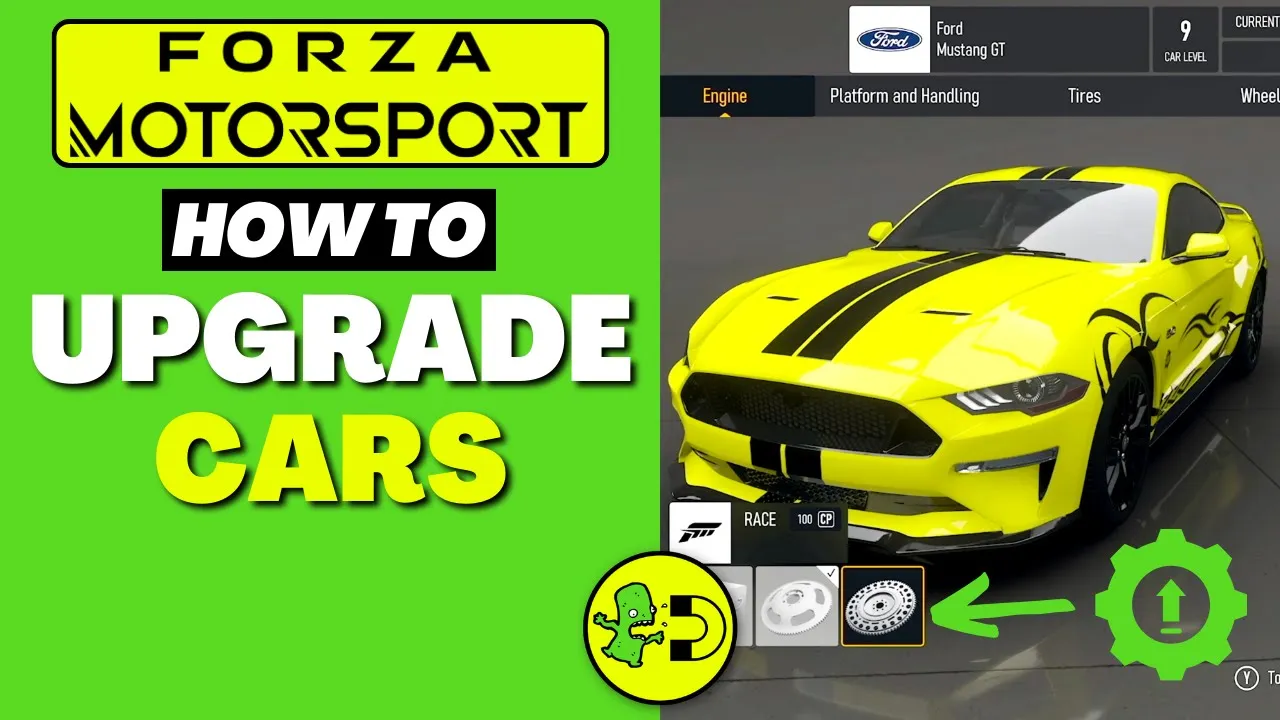
Then a full map of the upgrade tree, so any design would let players move through hundreds of parts without losing their place.

Shipped
→ A tabbed system, so navigation stopped being a maze
→ Car stats moved from bars to a balance graph
→ Quick Upgrades — one action, a sensible build
→ A clear read on the new Car Points economy
Prototypes in motion
Upgrade system wireframe prototypes — navigation, stats and quick upgrades
02
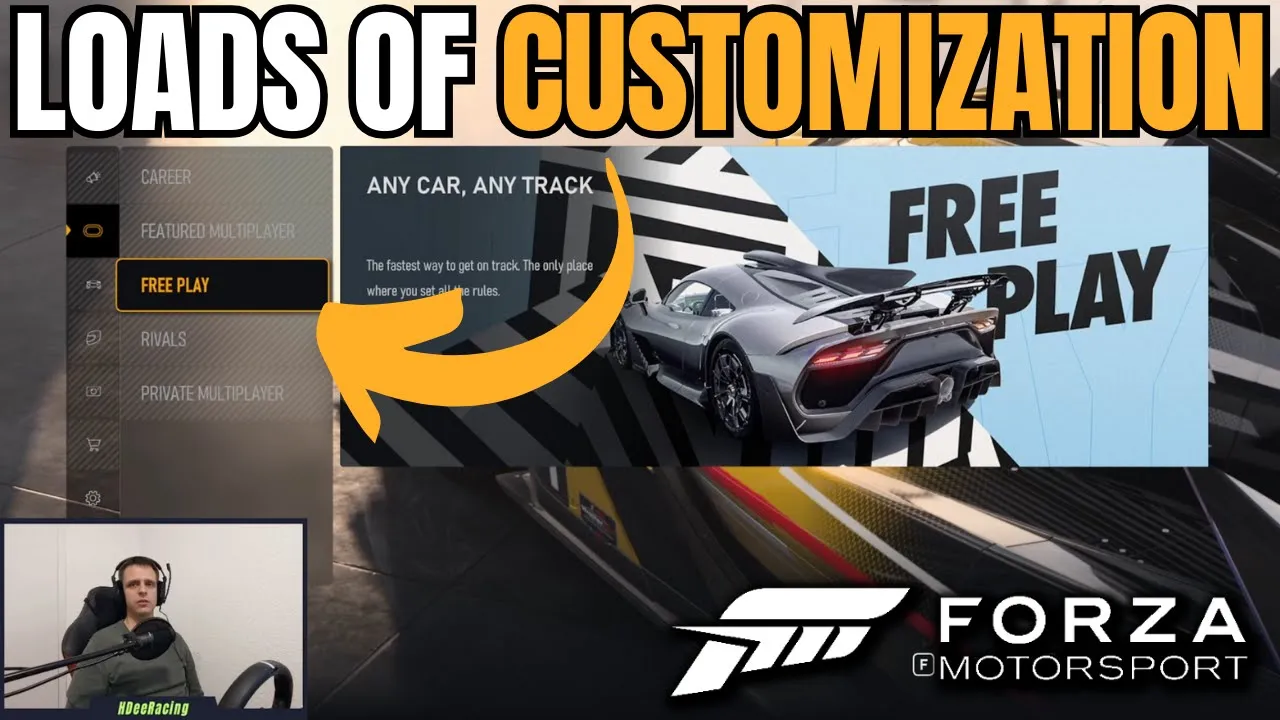
Freeplay
Research
With Microsoft User Research I surveyed FM7 players on the options they actually used. A small handful accounted for almost every session.
The pitch
Split event creation in two: quick events from the most-used options, advanced events for everything else.
Shipped
→ Freeplay surfaced as a headline mode, quick and advanced setup paths, and a live count of the settings a player has changed.
Freeplay in motion
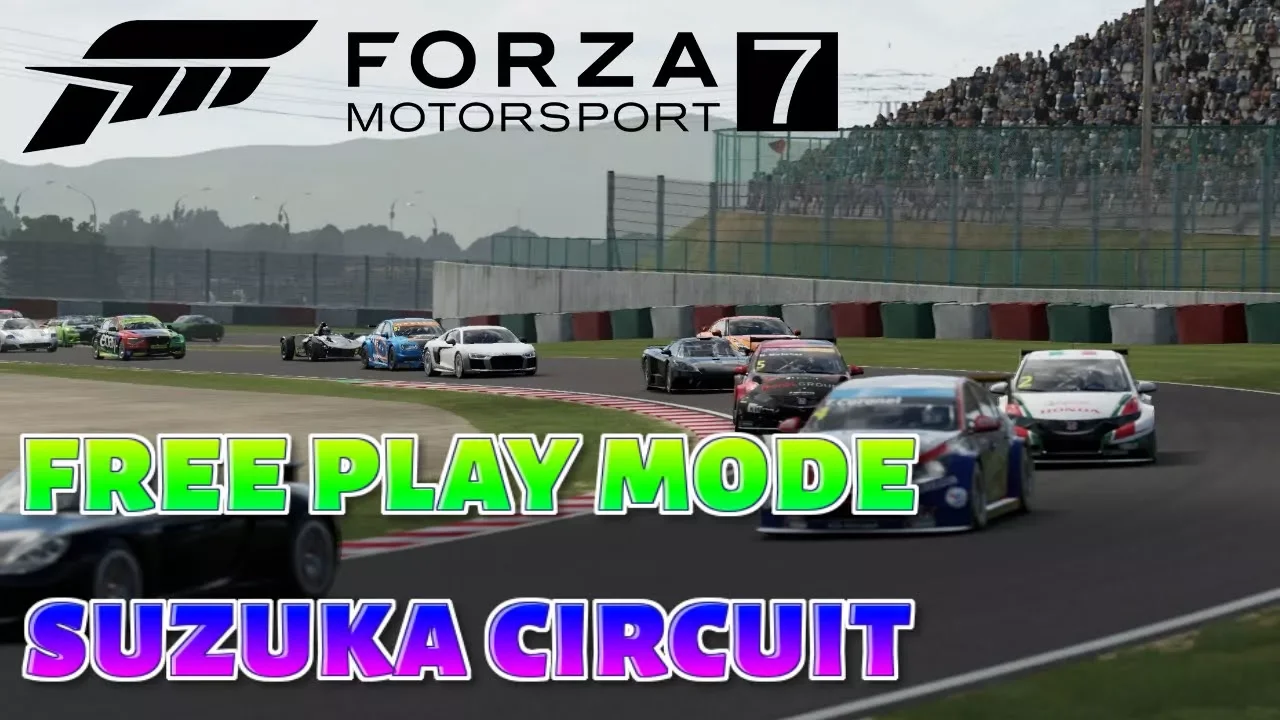
Freeplay setup wireframe prototypes — quick and advanced paths
03
Career
As the lead UX designer for career, I worked daily with game designers, producers and engineers to shape how a season of racing reads: what a series promises, what a player earns, and where they go next.
Career was the connective tissue — every other system had to make sense inside it.
Career in motion
Career and event selection wireframe prototypes — Builders Cup progression, series and results
04
What I took with me